
HPE ProLiant ML350 Gen11
A scalable enterprise tower server designed for virtualization, business applications, office infrastructure, storage, and growing IT environments.
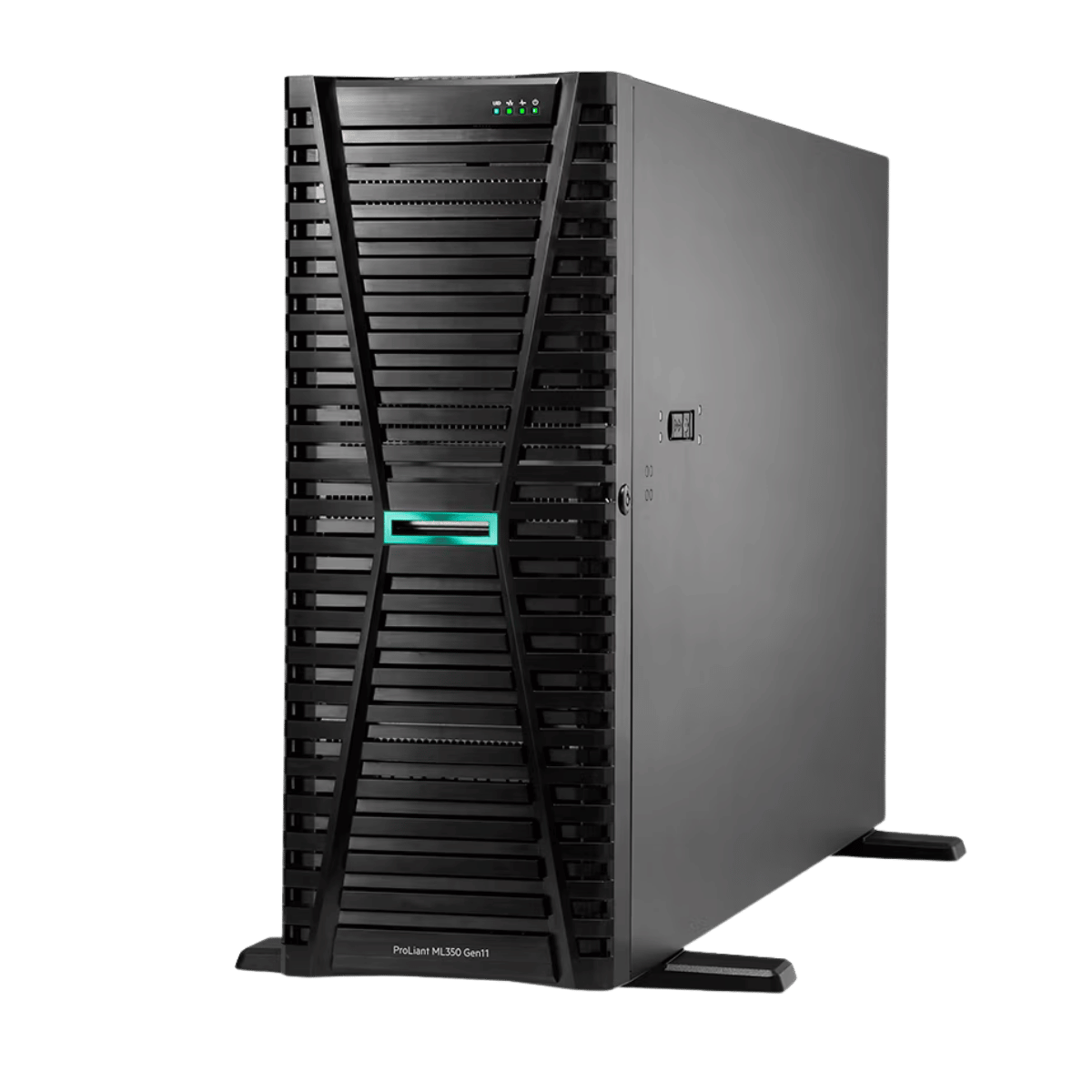
Buying the HPE ProLiant ML350 Gen11
Refurbished systems from this generation are rarely available through our sourcing. We can sometimes quote used equipment, but most requests are quoted as new systems through the HPE partner program. Tell us whether you prefer new or refurbished.
A quote request does not imply stock is reserved. Your quote will identify the offered condition and complete configuration.
Platform specifications
These are platform capabilities and documented options. Match the exact processor, chassis and installed components to the applicable manufacturer document.
| Form factor | Tower |
|---|---|
| Memory technology | DDR5 |
HPE ProLiant ML350 Gen11 specifications
Use the manufacturer reference for detailed option, installation and compatibility requirements. Match the exact model and generation.
Plan a complete configuration
Processor & memory
Match your application requirements to the supported processor family. Verify DIMM type, occupied slots and population rules; installed CPU count can affect available memory and expansion.
Storage & expansion
Confirm drive size, backplane, controller, carriers and cables. Check risers, PCIe slot availability and network requirements before selecting upgrades.
Condition & delivery
Compare the complete configured price, warranty terms and lead time. Include your quantity, destination and preferred condition when requesting a quote.
Common questions
Can I configure and buy this model online?
This model currently uses a custom quote. Send your desired configuration and we will confirm the available sourcing options. Our CTO catalog contains the refurbished models we sell most commonly.
Does the specification sheet describe my exact system?
No. It describes platform options for its document edition. Check your installed processor, memory, chassis, controller, power supply and expansion components before selecting parts.
Compare related systems
HPE ProLiant DL325 Gen11
A compact 1U AMD EPYC enterprise server built for virtualization, cloud, hosting, and dense compute workloads.
HPE ProLiant DL345 Gen11
A scalable 2U AMD EPYC enterprise server designed for virtualization, storage-heavy workloads, cloud infrastructure, and modern business applications.
HPE ProLiant DL360 Gen11
A dense 1U enterprise server built for virtualization, cloud, database, hosting, and high-performance data center workloads.
Choose your next step
Configure a common refurbished platform for the best value, or request a quote around your workload.